Written By
Alex Andresen
Published On
February 11, 2026
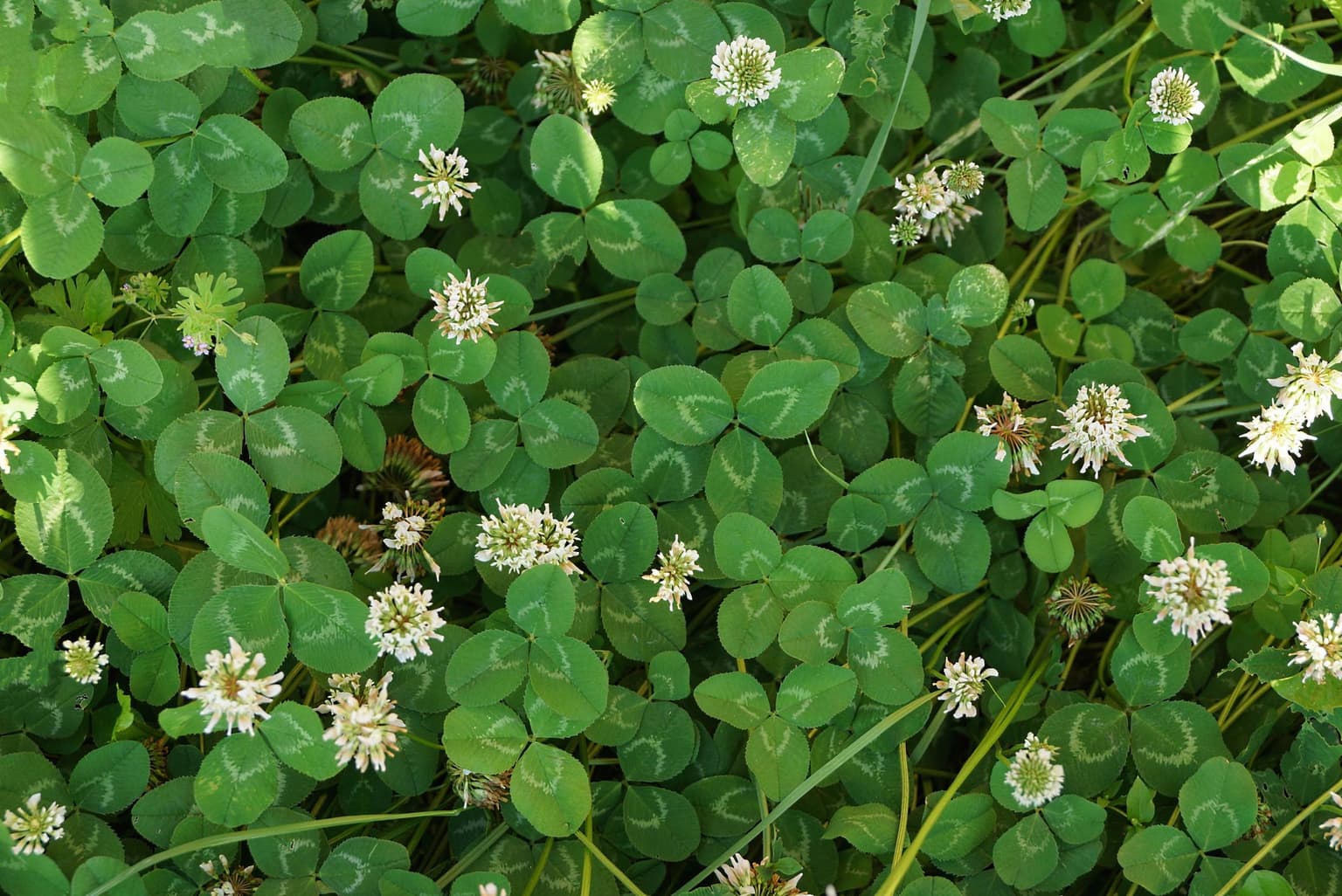
Clover is a common and often frustrating weed found in Wichita, Kansas lawns. Most homeowners recognize clover by its low-growing clusters of small, rounded leaves, often grouped in threes. In spring and early summer, clover may produce small white or pinkish flowers that stand out against the turf.
In our region, clover typically becomes noticeable in early spring as lawns come out of winter dormancy. Because clover stays green and active in cooler conditions, it often appears before turfgrass has fully recovered from winter stress. Homeowners may also notice clover spreading more aggressively after:
While clover can look “healthy” at first, it quickly becomes a problem in lawns. It spreads outward across the soil surface, filling in weak areas and competing directly with grass for space. Over time, clover creates uneven texture, patchy growth, and reduced turf density, making it harder for the lawn to recover naturally. Once established, clover rarely disappears on its own without proper treatment and improved lawn conditions.
Clover is a common broadleaf weed in Wichita, KS lawns, often appearing in areas with low nitrogen, compacted soil, or thin turf. Because it can establish during late winter, spring, and summer, mowing or hand-pulling rarely provides lasting control. Long-term clover prevention relies on consistent fertilization, targeted weed control, and soil-focused services like aeration to keep turf dense and competitive.
Clover is difficult to control because of its growth habits, lifecycle, and ability to thrive where turfgrass struggles. Unlike many upright weeds, clover grows low and outward, spreading across the soil surface rather than shooting straight up. This creeping growth pattern allows it to quickly fill thin areas of turf and reconnect even after partial removal.
Most clover species found in Wichita lawns behave as perennials, meaning they survive year after year rather than dying off at the end of a single season. Their root systems are shallow but efficient, allowing clover to persist through drought, compacted soil, and nutrient-poor conditions that weaken grass.
Timing also plays a major role in clover’s persistence. Clover becomes active early in the spring, often before turfgrass has fully recovered from winter stress. This head start allows it to establish and spread before grass can thicken and compete. In many cases, homeowners don’t notice the problem until clover has already formed dense patches.
Mowing and hand-pulling rarely provide long-term control. Clover grows below typical mowing heights, so cutting the lawn does little to slow its spread. Hand-pulling may remove visible leaves, but it often leaves behind stems or roots that allow the plant to regenerate. Even small remnants can reconnect and continue spreading.
Clover also survives stress and treatment better than many weeds. Its low growth habit protects it from heat and foot traffic, and its ability to tolerate poor soil conditions allows it to rebound quickly. Without addressing the underlying lawn conditions that favor clover, control efforts tend to be temporary.
Effective clover control requires more than a single spot treatment. Because clover thrives in specific lawn conditions, professional control focuses on both removing existing clover and correcting the environment that allows it to spread.
We start with selective broadleaf weed control paired with proper fertilization. These treatments target clover while protecting desirable turfgrass, and the added nutrients keep grass healthy and compete more effectively. Since clover often appears in lawns that are low in nitrogen, improving soil fertility helps shift competition back in favor of turfgrass.
In lawns with compacted soil or visible bare areas, aeration and overseeding play an important role in long-term control. Aeration relieves soil compaction and improves root access to air, water, and nutrients, while overseeding helps fill in thin areas with new grass. As turf density improves, clover has fewer opportunities to spread.
Timing and consistency are critical. Clover often requires repeat treatments across the growing season, especially in lawns where it has been established for multiple years. Ongoing lawn care programs help prevent regrowth and reduce future outbreaks.
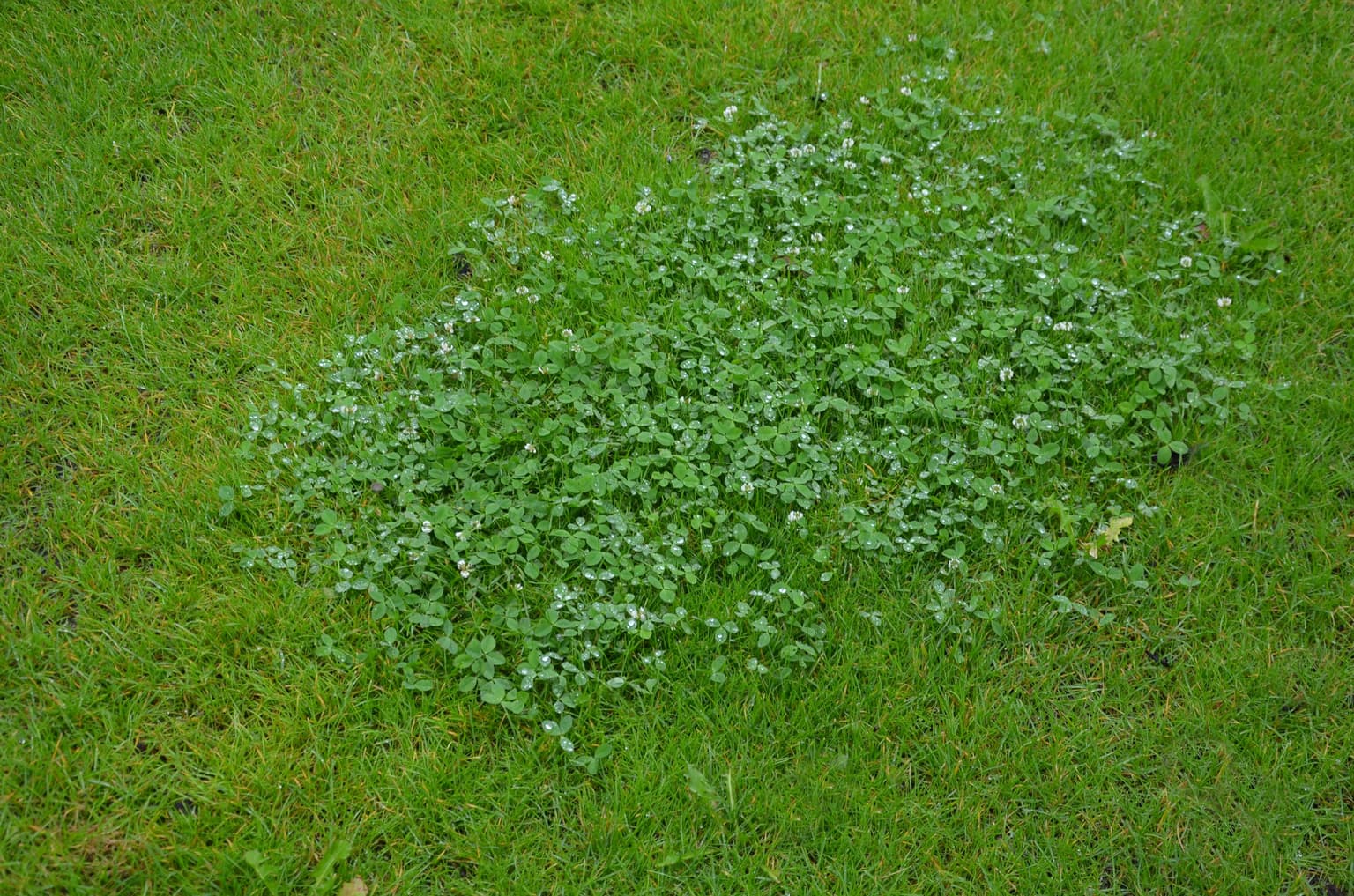
In lawn care, weeds are often treated as problems to remove. From an ecological perspective, however, many plants act as indicator species, responding quickly to changes in their environment. Amphibians are a classic example. Because they absorb water and oxygen through their skin, they’re often among the first organisms affected by declining water quality, making them useful indicators of environmental stress.
While clover isn’t a formal indicator species in ecology, we often treat it as one in the lawn care world. Clover tends to appear first in lawns with:
Rather than appearing randomly, clover often points to underlying issues such as inconsistent fertilization, poor soil structure, or thin turf caused by stress or traffic. Its low, spreading growth habit allows it to take advantage of open space quickly when grass struggles to compete.
Understanding clover as an indicator helps explain why it frequently returns after surface-level removal. Unless soil conditions and turf health improve, the conditions that favor clover remain, and the plant simply responds again.
Long-term clover control depends on consistent lawn care, not one-time fixes. Because clover can establish during multiple parts of the year — late winter, spring, and even summer — prevention requires an ongoing approach that keeps turfgrass competitive across seasons.
Annual fertilization and weed control programs help maintain proper nutrient levels and reduce opportunities for clover to take hold. When grass remains dense and healthy, clover struggles to find the open space it needs to spread.
In lawns with compacted soil or recurring thin areas, aeration plays a key role by improving soil structure and root growth. When combined with overseeding, these services help strengthen turf density and reduce the conditions that favor clover year after year.
Clover is rarely just a seasonal nuisance — it’s often a signal that the lawn needs more consistent care. If clover continues to return year after year, a structured lawn care plans that address fertilization, weed control, and soil health can help restore turf density and reduce future outbreaks. Understanding what your lawn is telling you is the first step toward long-term improvement.
Our lawncare programs target existing weeds while strengthening turf to prevent them from coming back. We’re locally owned and stand behind our work with guaranteed results.
Get your free lawn care quote today and see how we can help.
Written By
Alex Andresen
Published On
February 11, 2026

Calling all customers! Help us plant the seeds of kindness and give a much-needed hand to our neighbors. It’s time for our 3rd Annual Grassroots Giving food drive.

Calling all customers! Help us plant the seeds of kindness and give a much-needed hand to our neighbors. It’s time for our 3rd Annual Grassroots Giving food drive.
Calling all customers! Help us plant the seeds of kindness and give a much-needed hand to our neighbors. It’s time for our 3rd Annual Grassroots Giving food drive.

