Written By
Alex Andresen
Published On
February 18, 2026
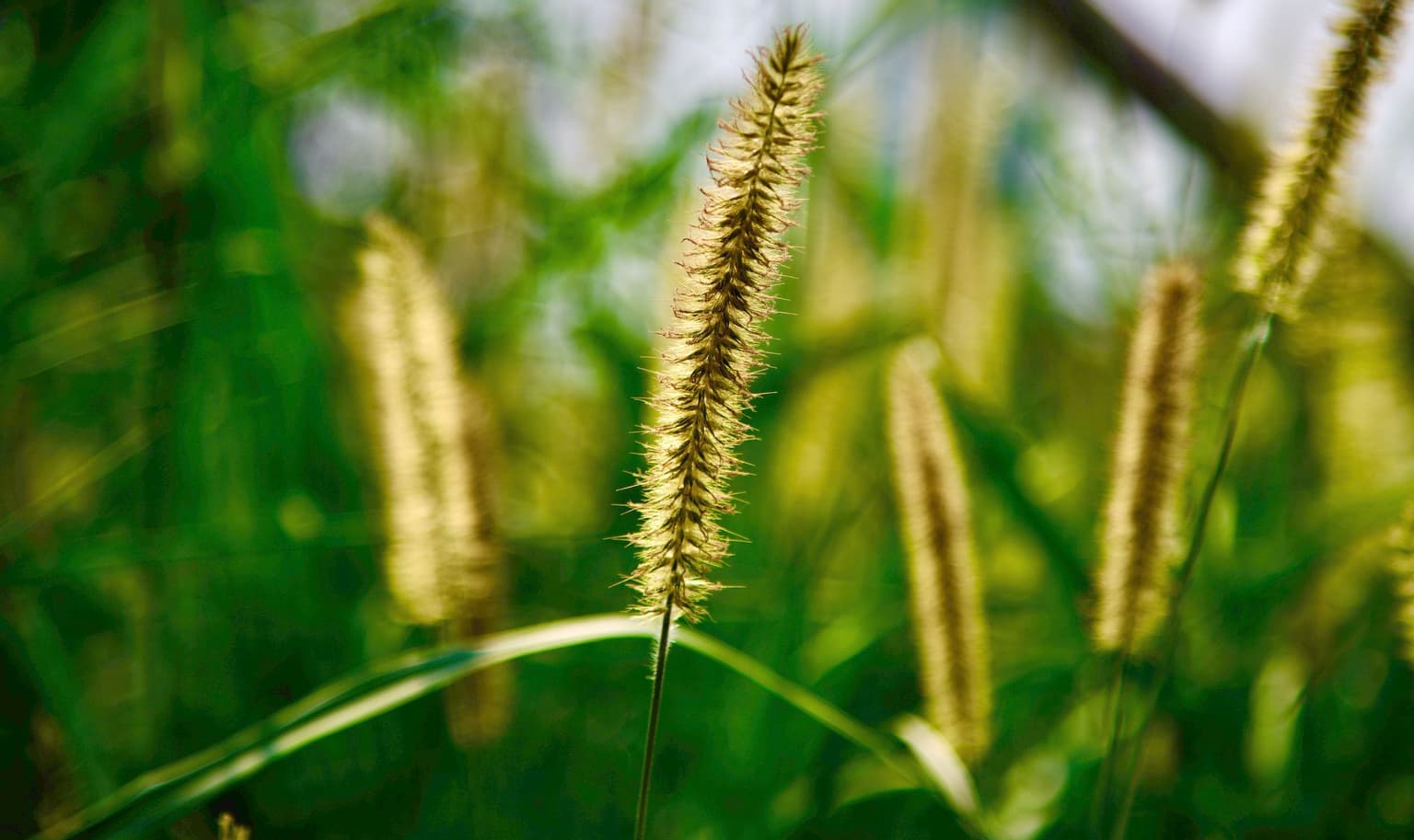
Foxtail is a common grassy weed that homeowners across Wichita often notice during the hottest parts of the summer. It typically appears as upright, fast-growing clumps of grass with narrow blades and a distinctive seed head that resembles a fuzzy fox’s tail. These seed heads can range from green to yellowish-tan as the plant matures.
In our region, foxtail usually becomes noticeable in late spring through summer, especially as temperatures rise and lawns begin experiencing heat stress. Many homeowners first spot foxtail after mowing, when the seed heads stand above the surrounding turf or when thin areas of the lawn suddenly fill with coarse, uneven grass.
Foxtail becomes a problem because it grows aggressively during peak summer heat, precisely when cool-season turfgrass naturally slows down. In Wichita lawns, it often takes advantage of:
These stress points create openings that foxtail quickly fills while turf struggles to recover.
Foxtail is a warm-season annual grassy weed that commonly appears in Wichita lawns during summer, especially in thin or stressed turf. It spreads by seed and is difficult to control once established, making properly timed pre-emergent treatments and ongoing weed control critical. Long-term prevention relies on healthy turf density, supported by fertilization and fall aeration and overseeding to reduce vulnerable areas where foxtail can return.
Foxtail’s biggest advantage is its growth timing and speed. It germinates when soil temperatures warm in late spring, often after many pre-emergent windows have already passed. Once established, it grows rapidly and produces seed within a single season.
Because foxtail is a warm season, annual grassy weed, mowing does not eliminate it. In fact, mowing often spreads seed and encourages lateral growth, allowing it to persist throughout the summer. Hand-pulling can work on very small infestations, but mature plants often break at the base, leaving roots behind and doing nothing to address future germination.
Foxtail is also highly tolerant of heat, drought, and compacted soils, allowing it to thrive when cool-season turfgrass is under stress. This makes it especially problematic during Kansas summers, when lawns are already struggling to maintain density and recover from seasonal pressure.
Professional foxtail control focuses on limiting current pressure and reducing future outbreaks, rather than relying on reactive fixes after the weed is already established. Because foxtail is a grassy weed, control options become more limited once it has emerged, making timing and long-term lawn strategy especially important.
Effective programs rely on:
Rather than reacting after foxtail is fully established, a professional approach reduces future outbreaks by addressing the conditions that allow it to thrive. A consistent lawn care program helps ensure foxtail pressure decreases over time instead of repeating every summer.

Foxtail’s success in Wichita-area lawns during summer has less to do with being a “stronger” plant and more to do with how it photosynthesizes.
Foxtail is a C4 grass, meaning it uses a different photosynthesis pathway than most cool-season turfgrasses like fescue or bluegrass, which rely on C3 photosynthesis. Importantly, C3 photosynthesis is the more energy-efficient system, which is why cool-season lawns can achieve dense growth and deep green color during mild spring and fall conditions.
C4 plants like foxtail evolved a different strategy. Their photosynthesis pathway is optimized for high heat and intense sunlight, allowing them to remain active during summer when cool-season lawns naturally slow down. While this approach trades some efficiency for stress tolerance, it gives foxtail an advantage in hot, dry conditions.
This difference helps explain why foxtail often appears in midsummer, especially in thinning or stressed lawns. It isn’t outperforming turfgrass under ideal conditions; it’s simply better adapted to summer stress, allowing it to take advantage of openings that appear when desirable grass growth pauses.
Long-term foxtail prevention starts with building a dense, resilient lawn that leaves little open space for weeds to establish. Proper fertilization supports steady turf growth, helping cool-season grasses remain competitive before and after peak summer stress.
Core aeration and overseeding play a critical role in foxtail prevention, especially in Wichita lawns. By loosening compacted soil and introducing new grass seed in the fall, vulnerable areas that foxtail exploited during summer are physically disrupted and replaced with healthy turfgrass.
When combined with proper mowing practices and consistent weed control, these strategies reduce the conditions foxtail depends on to return year after year. Foxtail is often a signal of underlying lawn stress, and correcting those issues is the most effective way to keep it from becoming a recurring summer problem.
Our lawncare programs target existing weeds while strengthening turf to prevent them from coming back. We’re locally owned and stand behind our work with guaranteed results.
Get your free lawn care quote today and see how we can help.
Written By
Alex Andresen
Published On
February 18, 2026

Calling all customers! Help us plant the seeds of kindness and give a much-needed hand to our neighbors. It’s time for our 3rd Annual Grassroots Giving food drive.

Calling all customers! Help us plant the seeds of kindness and give a much-needed hand to our neighbors. It’s time for our 3rd Annual Grassroots Giving food drive.
Calling all customers! Help us plant the seeds of kindness and give a much-needed hand to our neighbors. It’s time for our 3rd Annual Grassroots Giving food drive.

