Written By
Alex Andresen
Published On
February 4, 2026
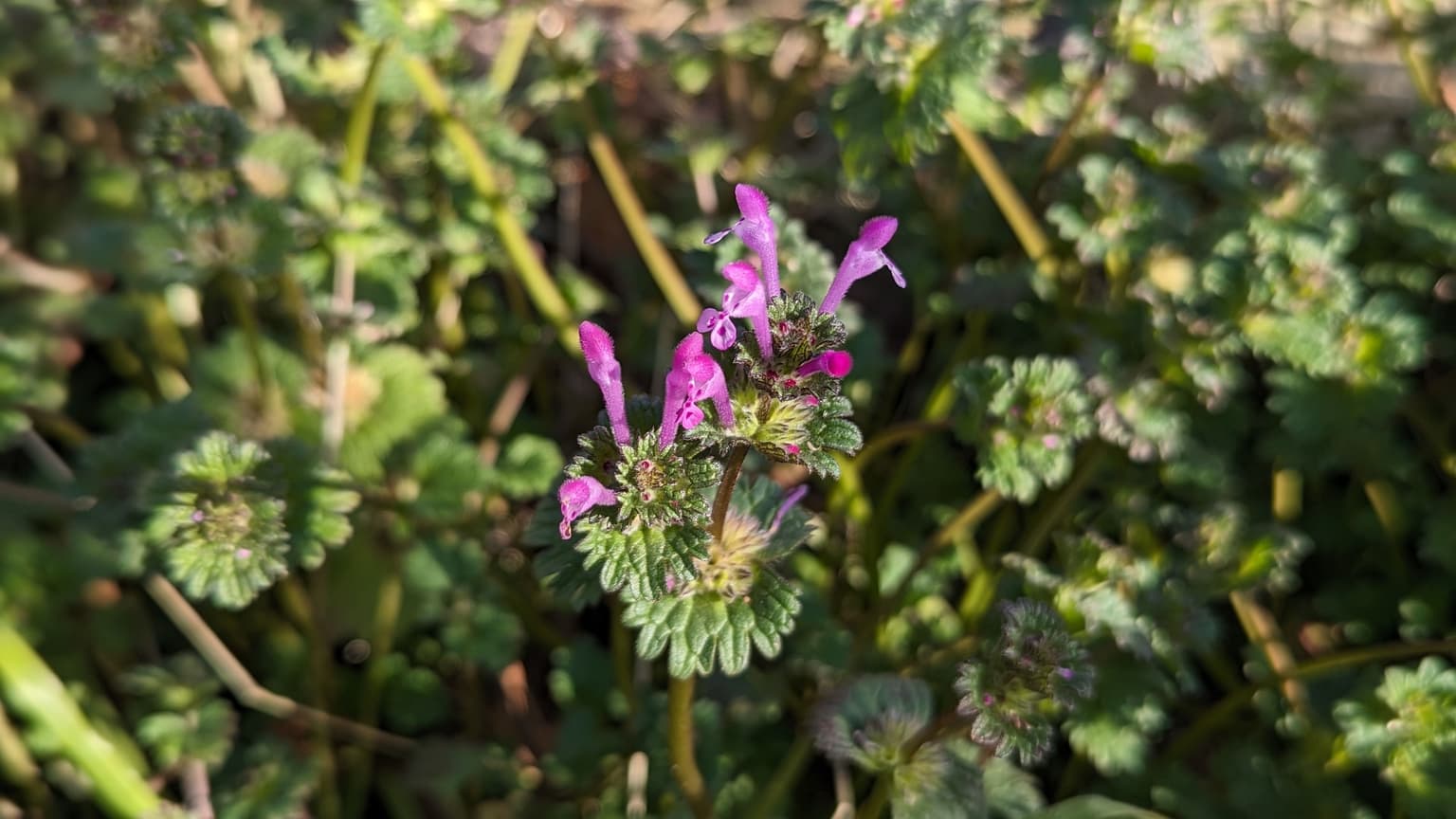
Henbit is one of the earliest flowering weeds homeowners notice in lawns across Wichita, KS, often showing up right in that winter-to-spring transition when most lawns still look half-asleep. If you’re seeing small purple blooms and low-growing green patches while the rest of the yard hasn’t fully “woken up” yet, Henbit is a top suspect.
What makes henbit unique is its timing. Henbit is a true winter annual, meaning it:
In our region, henbit is most noticeable in lawns with thin turf, bare soil, or winter stress, where it can take advantage of open space before grass enters active growth. These early-season conditions give henbit an opportunity to spread quickly and draw attention before most other weeds appear.
This article breaks down how henbit works, why it’s difficult to control, and what actually helps reduce it long-term, so homeowners can better understand both the problem and the solutions.
Henbit is a winter annual broadleaf weed that germinates in fall and becomes one of the earliest flowering weeds in spring across Wichita, KS. Because it completes most of its life cycle early, mowing and hand-pulling in spring often fail, making timing and consistency critical for control. Long-term prevention depends on fall and early spring treatments, along with maintaining dense, healthy turf to limit future outbreaks.
Henbit is hard to control because it plays a different game than summer weeds. As a winter annual, it gets established when turfgrass growth is slow, then hits the gas in early spring. By the time most homeowners notice the purple flowers, the plant has already done a lot of its work for the year—growing, spreading, and getting close to seed production.
Mowing and hand-pulling rarely solve the bigger problem. Henbit grows low and can persist below mower height, and pulling plants in spring doesn’t address the underlying issue: a seedbank in the soil that will germinate again the next fall. Henbit’s seeds can remain viable for years, which is why it often returns season after season if timing isn’t addressed.
The real challenge with henbit is when control happens. Fall treatments are typically more effective because plants are smaller and more vulnerable, while spring control becomes harder once flowering begins.
The good news is henbit usually isn’t very competitive in a dense, healthy lawn. Its advantage isn’t “winning fights” against thick turf; its advantage is showing up early when turf is least competitive. That’s why improving turf density and overall lawn health is such a big part of long-term prevention.
Effectively controlling henbit comes down to interrupting its life cycle early and consistently, rather than reacting once flowers appear.
Fall is an important window for managing henbit, since this is when seeds germinate and young plants begin establishing themselves in the lawn. Targeting henbit during this stage helps reduce the number of plants and seeds that survive through winter and reappear in spring.
If henbit is already present in early spring, timely spring applications can still be effective, especially before plants fully mature and set seed. Spring control helps manage existing growth and limits how much henbit can spread before it naturally dies off as temperatures rise.
Rather than relying on one-time spot treatments, professional weed control programs focus on seasonal timing and repeat applications as part of a broader lawn care approach. When weed control is paired with practices that support healthy turf growth, lawns become more competitive and far less inviting for henbit.
One of the most interesting things about henbit is how early it flowers, often blooming while winter weather is still fading. This isn’t a random quirk — it’s a biological strategy known as temporal partitioning.
Temporal partitioning means a species avoids competing with other species by being active at a different time, rather than competing directly for space or resources. In henbit’s case, that means flowering very early in the year, when few other plants are in bloom, and pollinators have limited food sources available.
By producing small but bright purple flowers early in the season, henbit takes advantage of this gap. Pollinators that emerge on warmer winter and early spring days have fewer options, which increases the likelihood that henbit gets pollinated quickly and successfully. This allows the plant to set seed before most grasses and summer weeds begin actively growing.
Once temperatures rise and lawns enter active growth, henbit’s advantage disappears. It isn’t especially competitive in dense turf, and as grass growth increases, henbit naturally fades out. This is why henbit tends to show up early, flower fast, and then vanish — its success comes from timing, not dominance.
Long-term henbit prevention starts with creating lawn conditions where the weed struggles to establish in the first place. Henbit thrives in open, thin areas of turf, so the most effective defense is a dense, healthy lawn that leaves little exposed soil for seeds to germinate.
Key prevention practices include:
Managing henbit is not about reacting to purple flowers each spring. It’s about reducing the conditions that allow it to return. When strong lawn care practices are combined with consistent weed control, henbit becomes far less likely to reappear year after year.
Our lawncare programs target existing weeds while strengthening turf to prevent them from coming back. We’re locally owned and stand behind our work with guaranteed results.
Get your free lawn care quote today and see how we can help.
Written By
Alex Andresen
Published On
February 4, 2026

Calling all customers! Help us plant the seeds of kindness and give a much-needed hand to our neighbors. It’s time for our 3rd Annual Grassroots Giving food drive.

Calling all customers! Help us plant the seeds of kindness and give a much-needed hand to our neighbors. It’s time for our 3rd Annual Grassroots Giving food drive.
Calling all customers! Help us plant the seeds of kindness and give a much-needed hand to our neighbors. It’s time for our 3rd Annual Grassroots Giving food drive.

