
Written By
Dr. Brad
Published On
August 1, 2025
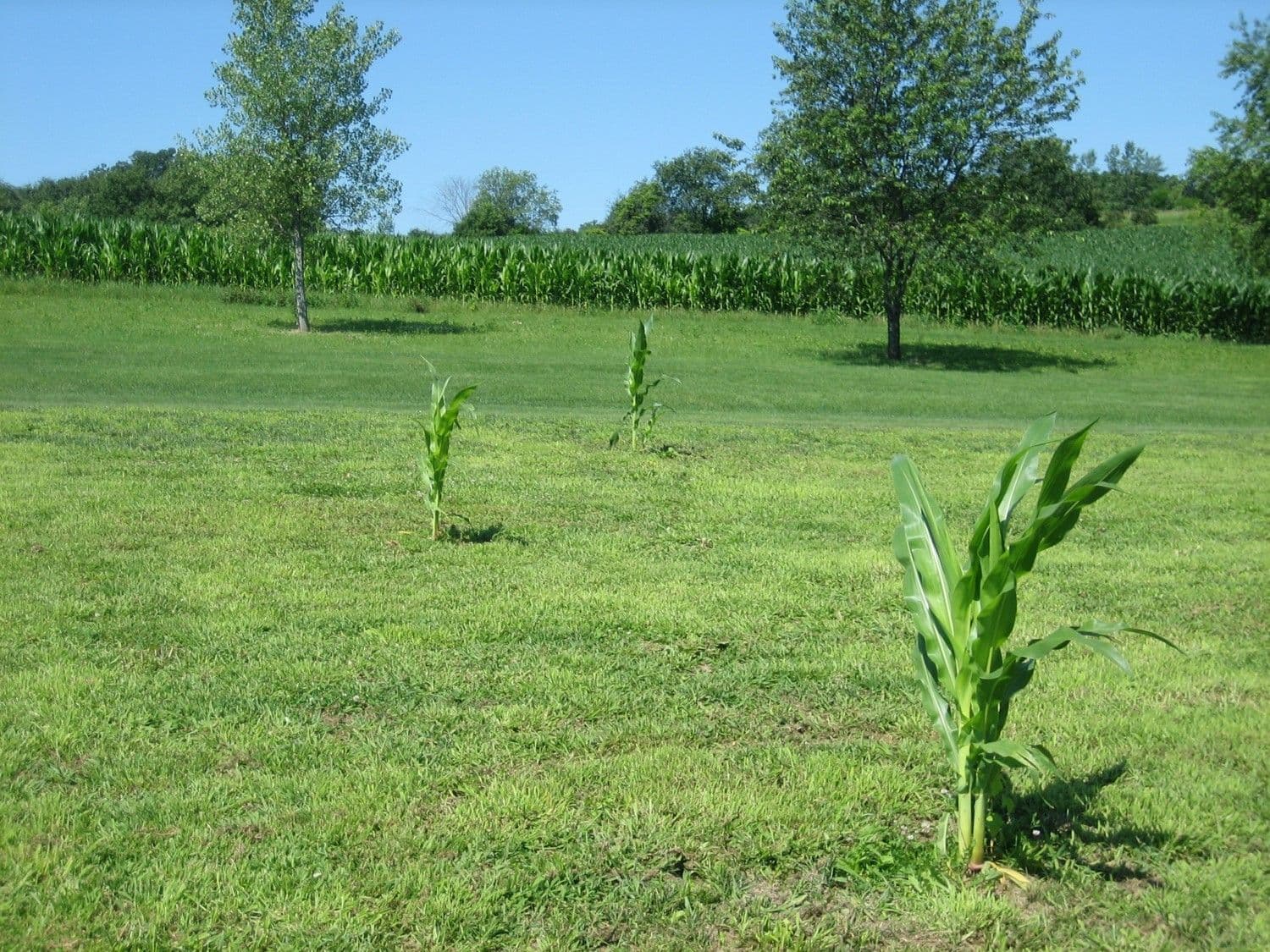
The average person has approximately 6,000 thoughts per day. Kids getting to school on time, who is picking them up, what time is softball practice, does corn sweat? The last thought, which I could have never predicted without the help of the morning radio show, was a complete derailment from my mind’s path for the day and the prompt for this discussion. ‘Corn sweat’ refers to the movement of water from the soil, through the plant, and its eventual release through stomata into the atmosphere, contributing to greater relative humidity and making hot temperatures even more oppressive. As a kid I spent many days baling hay on my grandfather’s farm. Not sure if it was the ‘hay sweat’ or being stuck in a semi-trailer or hay loft in July, but it was hot! Research by the USDA indicates that an acre of corn can contribute more than 3,000 gallons of water into the air daily. So maybe there really is something to this.
In the academic world, ‘corn sweat’ is more commonly referred to as evapotranspiration (ET). ET includes both evaporation, surface water changing to water vapor, and transpiration, the release of water through plant stomata into the atmosphere. Transpiration is essential for plant cooling, nutrient uptake and maintaining the plant’s water balance. I spent much of my academic graduate degree focusing on this exact topic.
Several environmental factors influence the rate of ET, including solar radiation, soil heat flux, relative humidity, wind speed, air temperature and available soil water. Without diving into the actual arithmetic, imagine a hot, sunny summer day with a moderate breeze compared to a cloudy and cool fall day. On those sweltering summer days, your lawn can use 0.3 inches of water per day through ET, whereas on that cool, cloudy day ET may be less than 0.1 inches.
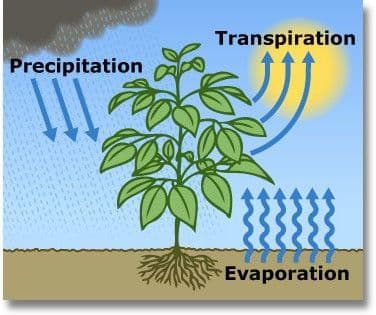
Why is this so important? ET measurements help us understand how much water we should be adding to the lawn for proper growth, while not misusing our water supply. When ET exceeds water inputs (rainfall or irrigation), the plants begin to prepare for drought. Sometimes this is good, by developing deeper roots. Other times it is not as aesthetically pleasing as it results in browning of the lawn. While unsightly, it is a plants natural response to survive this stressful period. This water deficit occurs nearly every summer, and some of us choose to supplement with irrigation. (Water cycle image credited to the United States Geological Survey)
In the end, all plants, our lawns, as well as corn ‘sweat’. They are contributing to environmental humidity through ET. And yes, agricultural ET is greater when plants are growing than when fields are barren. However, oceans, lakes, rivers and other surface water bodies contribute to 90% of the atmospheric water.
So yes, ‘corn sweat’ is a real thing, but it’s unlikely to be contributing anything significant to the oppressive summer humidity. Hopefully this helps you move past this thought and onto the next 5,999 other thoughts of the day.
Dr. Brad DeBels serves as the Vice President of Operations for Weed Man Lawn Care E3 Group. Brad received a PhD in Soil Sciences & Turfgrass Management in 2013 from the University of Wisconsin (B.S. 2008, M.S. 2010, PhD 2013). With a graduate degree & over 2 decades of experience in the residential lawn care & golf course industries, Dr. Brad provides direction for our programs & services while also creating a variety of educational pieces to help homeowners better understand their lawn & their lawn care services.
Written By
Dr. Brad
Published On
August 1, 2025

Calling all customers! Help us plant the seeds of kindness and give a much-needed hand to our neighbors. It’s time for our 3rd Annual Grassroots Giving food drive.

Calling all customers! Help us plant the seeds of kindness and give a much-needed hand to our neighbors. It’s time for our 3rd Annual Grassroots Giving food drive.
Calling all customers! Help us plant the seeds of kindness and give a much-needed hand to our neighbors. It’s time for our 3rd Annual Grassroots Giving food drive.

