Written By
Ryan LeClaire
Published On
September 29, 2026
We’re sure you’ve noticed a lot of August-like weather in September in recent years. And September weather in October.
Lawn care season is extending further into the fall. This isn’t quite changing the weed control playbook, but it’s changing the timelines.
This fall, the National Oceanic and Atmospheric Administration (NOAA) predicts a balmy fall across the US, while an exceptional El Niño is bringing Canadians an extra-warm fall.
Let’s take a look at what that means for your lawn.
A longer growing season doesn’t necessarily mean you need to introduce any new treatments or activities into your lawn care regimen. But you will probably have to shift the dates you typically perform the standard ones.
From a high level, it’s really all about doing things according to your conditions, not your calendar.
The most obvious difference is that your grass is simply going to keep growing longer into the fall months. This means you need to keep mowing further into the season.
We often say that proper mowing habits are probably one of the most underrated beneficial cultural practices in the world of lawn care.
Our golden rule: Keep mowing if it’s still growing.
Depending on your grass type, you’re also going to want to cut your lawn a bit shorter than normal length on your very last mow of the season. This is crucial because you don’t want long grass that will be pressed down by snow.
Once the grass is matted down:
Don’t slack on your lawn mowing, and take that last mow of the season seriously to lay the foundation for next year.
If your grass has more time to grow, so do weeds.
What does this mean? Basically, if you have a few dandelions in your yard or you’re struggling with a little bit of crabgrass, you may be tempted to just see if it comes back next year. Or you may write it off as a “next year problem.”
But you should know:
That being said, timing is often key and certain weeds are best attacked at specific points in their growth cycle. There is no catch-all treatment, so it’s best to speak to an experienced weed control expert now to see if you should take steps today or wait until next season.
Like weeds, lawn diseases and lawn insects like grubs don’t go away on their own. And saying that either is a ‘next year problem' is probably setting yourself up for a larger problem.
But won’t the snow and ice kill the lawn disease?
Probably not. It’s actually more likely the snow traps heat and moisture at the surface, which will actually insulate the problem instead of killing it. At the same time, many lawn insects like grubs, ants, or beetles will simply dig deep into the soil and spend the winter below the frost line.
Again, at the very least, you should talk to a lawn care expert today to come up with a plan and timeline.
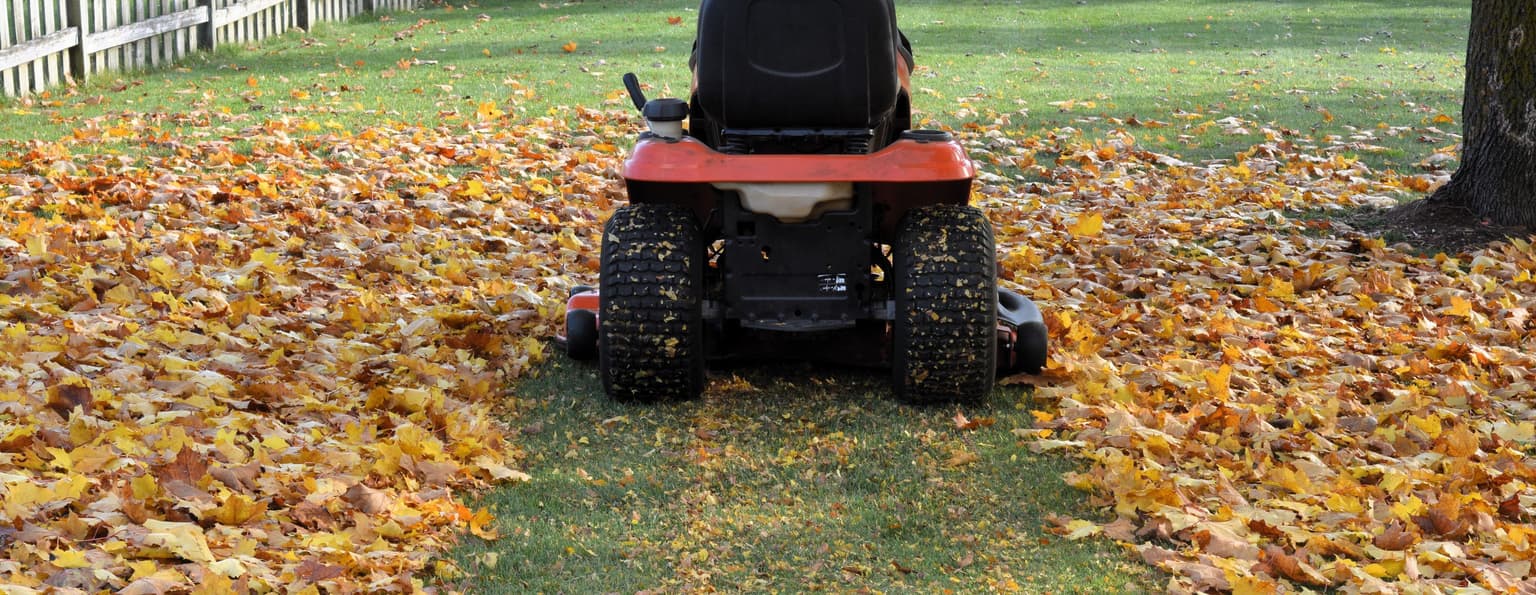
As far as technology goes, there is actually nothing better than a good old-fashioned lawn rake and bagging your leaves.
You don’t want to leave a thick layer of leaves on your lawn through the fall and into the winter because this can:
But you may have heard a lot of good things about mulching your leaves with a lawnmower. And it will clearly take way less time and be a lot easier on your back.
Mulching also has natural benefits: you shred unwanted leaves into tiny organic particles that feed your lawn as they decompose.
However, it’s important to know that mulching is only a really effective practice on a thin layer sitting on top of your lawn. It’s not as effective on a thick layer that has been sitting there a while.
If you only have one tree in your yard, and you usually only get a thin layer of leaves, this is a perfect use case. But if you have multiple trees that usually drop a blanket of leaves onto your lawn, you will have to mow/mulch multiple times and stay on top of it.
If you let leaves sit too long on the grass, you trap moisture and open the door to lawn diseases and fungus.
You are probably not going to have to mow your lawn as often, but you definitely should not stop.
As we said in the previous sections, you don’t want long or matted grass over the late fall and winter months. This will trap moisture and create an environment for mold, lawn diseases, or other lawn pests.
Don’t forget to cut a little bit shorter on your final mow of the season!
Aeration breaks up compacted soil by removing cores of soil from your lawn, and it helps to reduce thatch buildup, allowing water, air, and nutrients to reach the root system.
This will:
This can work particularly well in combination with overseeding, as the seeds fall into new holes, allowing for maximum seed-to-soil contact and more germination.
Why should you fertilize your lawn in the fall? The season is over, right?
Wrong!
A late-season application provides a green-up effect and loads your lawn with essential nutrients to sustain it through the winter months. Building up nutrient reserves will give your lawn:
Our slow-release fertilizer gives your lawn a steady supply of essential nutrients over the final weeks of fall and ensures your grass stays fed as it prepares to go dormant.
You need to be extra strategic about water in the fall months.
Fall weather is typically more moist, with less hot sun during the day to bake the moisture off. These cool autumn temperatures and natural rain help turf recover from summer stress, but grass still needs moisture to build strong roots before winter.
Don’t water on a schedule. Water when your lawn needs it based on how much rain you’ve had recently. And just like during the summer months, water infrequently but deeply, and water in the early morning instead of the evenings.
There is no hard date for when to stop mowing your lawn. Keep an eye on whether or not your lawn is still growing and your long-range forecast to make your decision.
Absolutely! Keep mowing as long as your grass is growing.
Warmer, summer-like conditions in early fall are making September lawn care more important than ever.
In most cases, it is not. In fact, a fall lawn fertilizer can set you up for a great growing season next year.
You should definitely consider aerating your lawn in fall.
You can also take it to the next level by overseeding your lawn in the fall for a thick, green lawn next year.
It can be all too easy to say that these weeds are next year’s problem. However, you should definitely speak to a weed control expert to see what steps can be taken today to make sure this isn’t a massive problem next year.
We have the tools, techniques, experience, and expertise to help you grow a championship-level lawn!
“I had all but given up hope for my lawn ... it was 50% weeds, 25% crabgrass and 25% regular grass. After a summer of overseeding, fertilizing and weed treatments by The Weed Man, the lawn improved significantly.” - A 5-Star Google review.
You can start right now with a free lawn care quote to show you what’s possible.
Written By
Ryan LeClaire
Published On
September 29, 2026
Why September and October Lawn Care Is Changing


Calling all customers! Help us plant the seeds of kindness and give a much-needed hand to our neighbors. It’s time for our 3rd Annual Grassroots Giving food drive.
Calling all customers! Help us plant the seeds of kindness and give a much-needed hand to our neighbors. It’s time for our 3rd Annual Grassroots Giving food drive.

